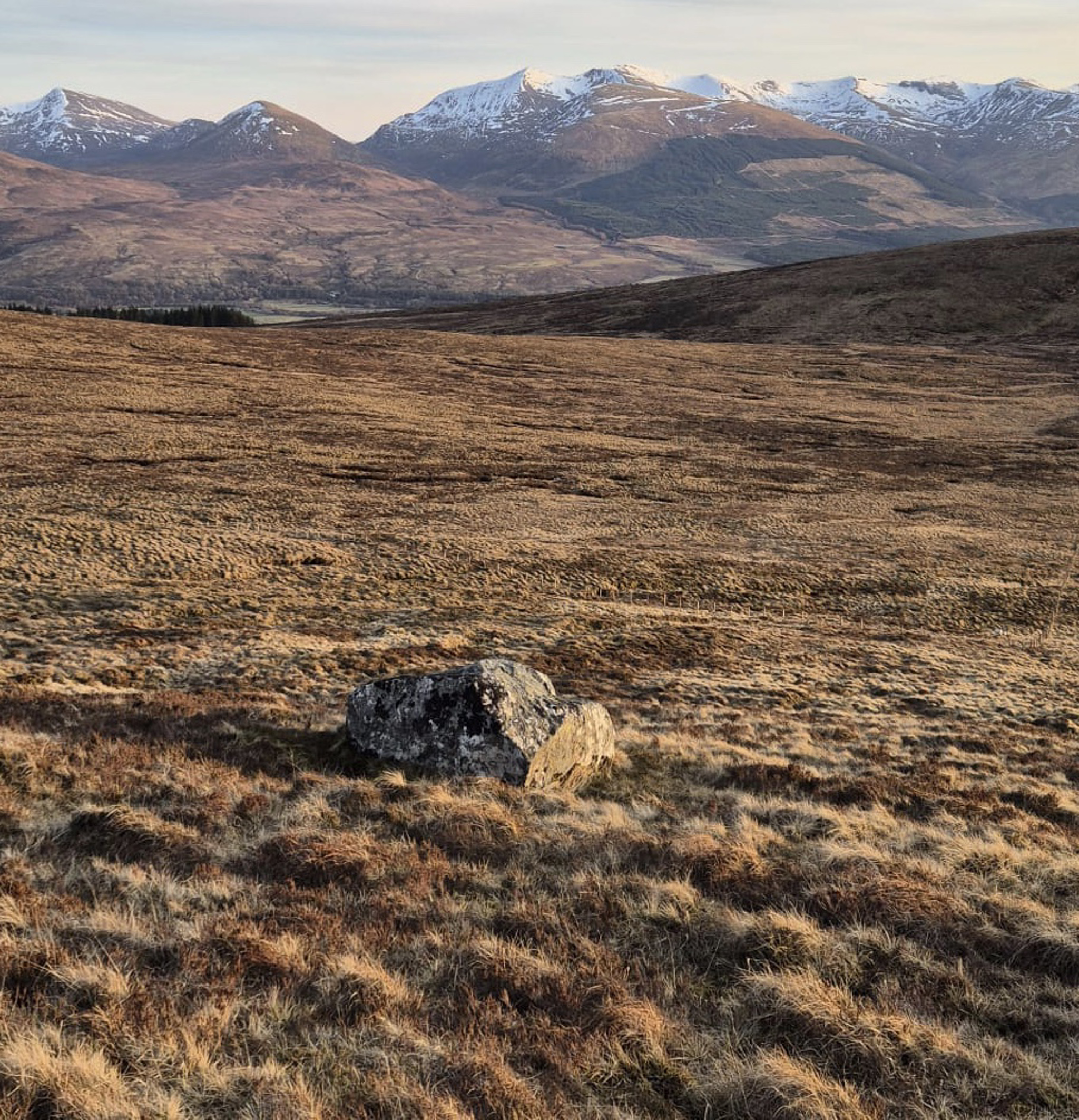
The Aftermath of the Battle of Boloyne
The battle of Boloyne was in reality an inter-clan skirmish . It happened at a time when the Keppoch MacDonalds were closely tied to Clan Mackintosh through marriage. The Camerons were neighbours and the two Lochaber clans were usually allies. On this occasion though the Camerons led by Alan Beag of Tomacharraich had raided the Mackintosh lands to the east. They then dared the Keppochs to interfere as they drove their booty (stolen from Keppoch's father in law) homewards through the Braes. This incensed the MacDonalds and the young Iain Dubh of Bohuntine led a party of his father’s warriors to intercept the raiding party. The resultant skirmish ended with the Camerons being annihilated and the cattle returned to their rightful owner. Iain Dubh, in pursuit of the survivors, caught up with the leader at this stone and butchered him there.
This incident has been recorded in D.C. MacPherson’s writings
from D.C.'s letter to Juliet MacDonald.
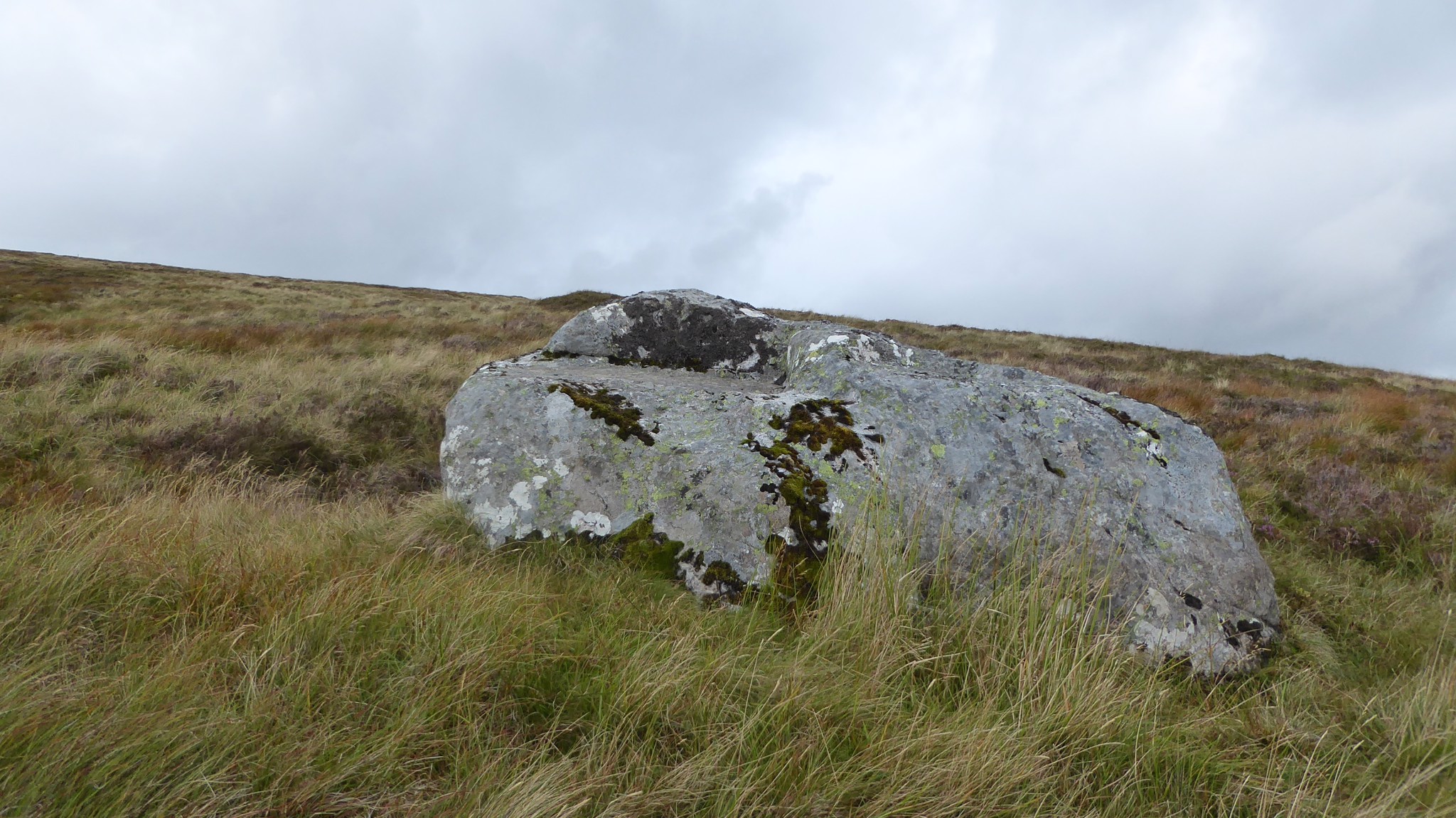
“Beside John, Ranald Mór had, by McIntosh of Kyllechie's daughter, Alastair Bhoth-Fhloinn (Bolyne) and Ranald. You remember all about the " Battle of Bolyne." The Camerons made a raid on the MacKintosh and raised his creach. Allan Cameron = Ailein Beag Thom-a'-charraich, was at their head. When in Glenturret he sent a messenger to Ranald Mór who was badly with pleurisy, at Coille-Diamhain, the then seat of Keppoch, to tell him his father-in-law's creach was passing by, daring him to prevent the Camerons from passing. Alastair Bhoth-Floinn, his eldest, had a slight arrow wound on his foot & excused himself. So your Progenitor was sent (to meet them) at the head of the Braerians. Of course the Creach was taken from the Camerons. Allan Beag was killed at Clach-Ailein on the hill-side some two miles from Bolyne. Clach-Ailein is the boundary between the Mcintosh & Walker there. I went to see it in 1876. When John Dubh returned his father asked him what did he do with them.
•Chuir mi am fear mu dheireadh dhiubh thair Lochaidh," said John.
" Cha tillinn-sa gus an cuirinn clach 'us aol mu'n sroin (- imprisoning)," said his father. Alexander was rife with jealousy, and when John was on his way home he set a fierce hound after him. John knew his brother too well, so he killed the hound with his sword. John, as I said, followed the last of the Camerons to Gairlochy. When that Cameron got across he fixed an arrow at John, saying:
" Có dhiu's fhearr, an t-iubhar sin,
Na iubhar Loch-a-Tréig? "
Which yew arrow is the best,
Mine or the Loch Treig yew?”
John stooped himself & was missed; so he fires an arrow retorting —" Có dhiu's fhearr, an t-iubhar sin na 'n t-iubhar agad fhéin?" and the Cameron fell”
It was also included in Alan the Ridge's poem "Sliochd an Taighe" written in Cape Breton.
"A chiad sonn diubh thrèig a'Cheapach
Dhearbh e ghaisge'm brais na h-oige,
La Bhoth-loinn a chuir e'm batal
Thill e chreach gu Mac an Tòisich:
Dh' thàg e Camshronaich san araich
Bu bheag an àireamh shàbhail beò diubh
Dh' thàg e'n ceannard aig Clach Ailein
'S toitean farranach air fhèosaig
The first warrior to leave Keppoch
Proved his mettle in impetuous youth,
He fought the Battle of Boloyne
And returned the foray to MacIntosh;
He left Camerons on the field
Very few of whom survived
He left their leader at Allan's Rock
With gruesome cutlets on his beard."
.
D.C. Macpherson writes again:
The following stanzas, from an old song, commemorate the feud of
Boloyne :—
“Ho o ho, na ha o hé,
“An d’fhidir, an d’fhairich, ro ’n cuala sibh ;
Ho o ho, na ha o he,
Mu’n luid nach toir cuideachd gluasad air ?
“ Bha gnothach beag eile mu dheighinn Bholoinne,
’S gu’n innis mi soilleir ’s an uair so e:
Bha creach Mhic-an-Toisich aig muinntir Shrath-Ldchaidh,
’S na gaisgich Clanndonaill thug bhuapa i.
“’S math is aithne dhomh ’n t-aite, ’s na choinnich na h-Armainn,
Fir ùra a’ Bhraghad ’s an uair sin iad ;
Bha iubhair Loch-Treig aig na fiùrain nach geilleadh,
’S bu shunntach na’n deigh fir Ghlinn-Ruaidh leatha.
“ Tha comhdach air fhathast, far am beil iad na’n laidhe,
Gu’n d’fhnirich Clach-Ailein gun ghluasad as ;
Gu’n robh iad na’n sleibhtrich aig ianlaith an t-sléibhe,
’S na chaidh dhachaidh le sgéul diubh bu shuarach e.
* Ceann-feadhna air maithibh, Iain Mor Shliochd-an-tighe,
’S ioma ceann bharr na h-amhaich a dh’fhuadaich e;
Ma’s fhior mo luchd-sgeoil-sa, chuir e thairis air Lochaidh,
Am beagan ’bha beo dhiubh, ’s an ruaig orra !”
“Ho o ho, na ha o hé,
“Were you aware of, did you feel, before you heard;
Ho o ho, na ha o hé,
About the marsh that the company did not move on .?
“ There was another little matter after Boloyne,
And I will tell it clearly this time:
The people of Strathlochy had the Mackintosh’s plunder,
And the warriors of Clandonuill took it from them.
“I know the place well, where the armies met,
They were the new men of the Braes then;
The striplings with the yews of Loch-Treig who would not yield .
The men of Glen Roy were happier afterwards .
There is a covering on it yet, where they lie,
Clach-Ailein remained motionless;
They were the birds strewn all over the hillside,
And the most insignificant one went home with a story to you.
The noble leader, Big John of the Sliochd an Tighe ,
He has swept away many heads from the top of the neck;
If my storytellers are true, he sent the few who were alive, across Loch Lochy, and routed them!”